Instituto Portugues do Mar e Atmosfera - Homepage

  • Who we are | 
  • Where we are | 
  • Scientific Council | 
  • Research | 
  • eLibrary | 
  • ipma encyclopedia  | 
  • Contacts | 
  • Português
  • Weather
    • Weather forecast
    • 10 days and hourly forecast
    • Weather Warnings
    • Meteorological charts
    • Vertical profile
    • Satellite observations
    • Radar
    • Lightning
    • Solar Radiation
    • Online weather stations
    • World forecast
    • Tropical cyclones forecast
    • Report a meteorological phenomenon?
  • Seismic
    • Seismic maps
    • Shakemap
    • Felt an earthquake?
    • Moment Tensor
    • Networks
    • Bulletins
    • Projects
  • Sea
    • Beaches and ports
    • Marine forecast
    • Significant wave height
    • Sea peak period
    • Surface current
    • Sea surface temperature
    • Sea surface height
  • Climate
    • Climate Monitoring
    • Climate Normals
    • Dataclima
    • Daily monitoring
    • Long data series
    • Monthly monitoring
    • Drought
    • Greenhouse gases
    • Climate Extremes
    • Climate web portal
    • Climate Services
  • Bivalves
    • Bivalves - Situation point
    • Legislation and Documents
    • Production areas
    • Biotoxins
    • Phytoplankton
    • Contaminants Metals
    • Microbiology
    • Bivalves - historical
  • Fisheries
    • Disclosure
    • Projects
    • Fish management
    • ICES
  • Aeronautic
    • TAF and METAR
    • Selfbriefing
    • Know more
  • Agriculture
    • Soil Moist Index
    • Vegetation Health Index (VHI)
    • Fraction of Absorbed Radiation (FAPAR)
    • More information
    • Agroclimatic platform
  • Health
    • Ultra-violet index
    • Ozone
    • Pollen
  • Vessels
    • Framework
    • RV Mário Ruivo
    • RV Diplodus
    • Maris
    • Recife II
    • Cardium
  • Space
    • MSG satellite
  • Rural Fires
    • Mainland Rural Fire Danger
    • Madeira Rural Fire Danger
    • Reports Rural Fire Danger
IPMA>Media Center>News

IPMA tests underwater camera system
2025-12-19 (IPMA)

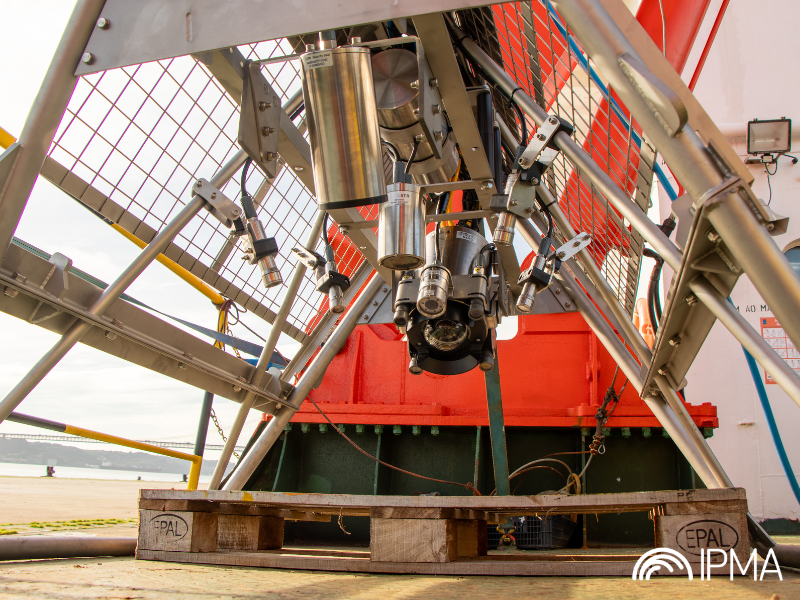
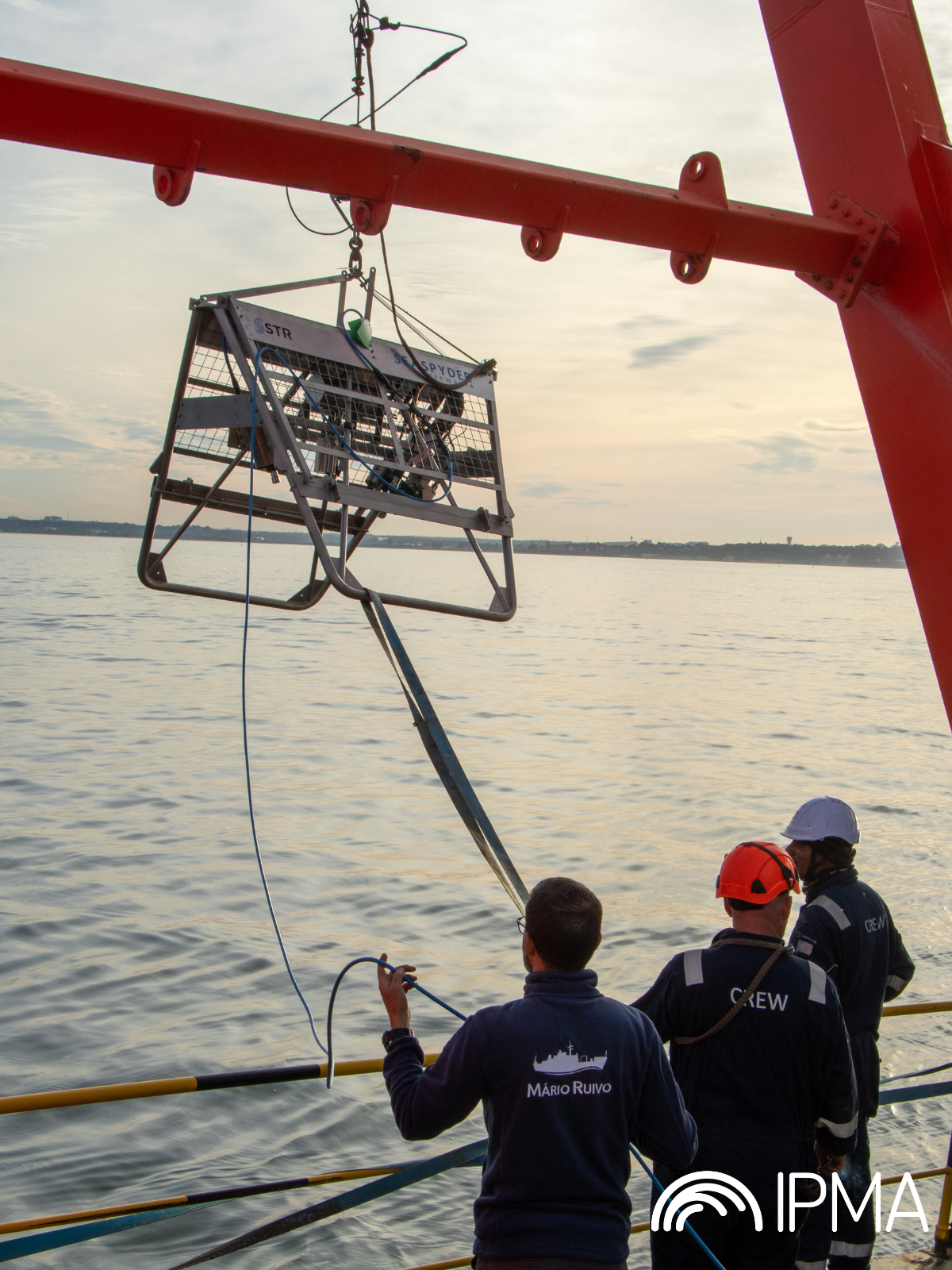
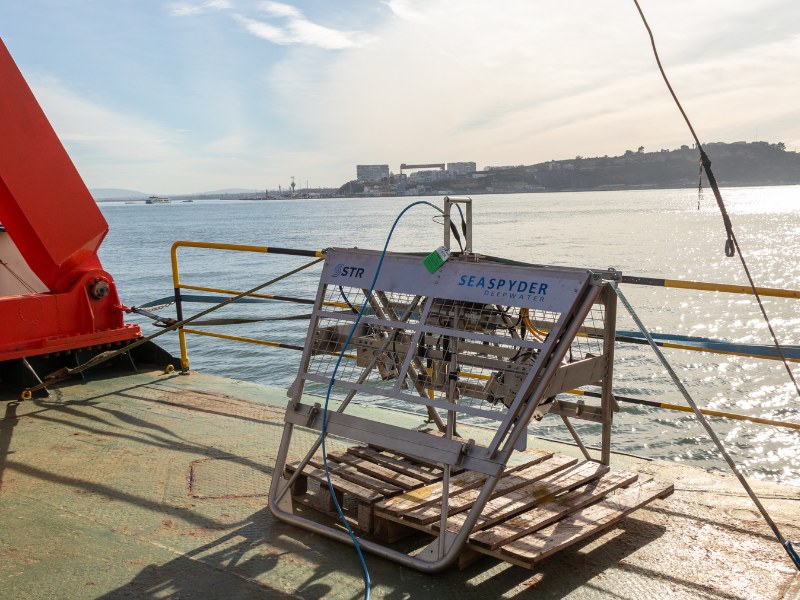
The Portuguese Institute for the Sea and Atmosphere, I.P. (IPMA) has recently acquired a deep-water telemetry underwater camera system (rated to 4,000 metres) from Subsea Technology & Rentals (STR), known as the Sea Spyder Deep Water. This system also includes an electric winch (STR SeaTow 6000), equipped with a drum capable of holding 6,000 m of 11.4 mm cable. The winch is fitted with a 5,000 m, 14.15 mm coaxial tow cable. The system is designed to study deep-sea environments, specifically to observe and record high-resolution video and images of the seabed in real time.

This equipment is required for the identification and monitoring of deep-water habitats and Vulnerable Marine Ecosystems (VMEs), with the aim of studying and characterising the types of habitats found along the Portuguese coast, particularly in the areas covered by Commission Implementing Regulation (EU) 2022/1614 of 15 September 2022. This regulation aims to protect vulnerable marine ecosystems and to guide sustainable deep-sea fishing practices within the European Union, ensuring that fishing activities do not cause significant adverse impacts on these sensitive habitats. In addition to these studies, the equipment will be used to support the development of management and monitoring plans for Oceanic Marine Protected Areas, which are of great importance for Portugal to achieve the 30×30 target, an international commitment to protect at least 30% of the planet’s terrestrial and marine areas by 2030, aligned with the implementation of the National Network of Marine Protected Areas (RNAMP).

Accordingly, acceptance tests of this equipment were carried out on board the research vessel NI “Mário Ruivo” on 17 and 18 December 2025, with the participation of technicians and researchers from IPMA, Vórtice-Equipamentos Científicos, Lda., and STR.

Through this initiative, Portugal takes a decisive step in contributing to global ocean monitoring efforts, strengthening national scientific and operational capacity for the observation and monitoring of the marine environment. This information is essential, for example, to understand the global framework of marine biodiversity, to establish a scientific basis for management decisions, to support sustainable fisheries management, to comply with legal and international obligations, to enhance knowledge and valuation of natural heritage, and to assess Good Environmental Status (GES).


Imagens associadas


Media Center

  • Entrance Media Center
  • News
    • 2025
    • 2026
    • 2024
    • 2023
    • 2022
    • 2021
    • 2020
    • 2019
    • 2018
    • 2017
    • 2016
    • 2015
    • 2014
    • 2013
    • 2012
  • Press Releases
  • Multimedia
  • Disclosures

Follow us on

  • icon facebook Facebook
  • icon twitter Twitter
  • icon youtube Youtube
  • icon Educast IPMA Educast


  • Media

    • News
    • Communiqué
    • Lectures / workshops
    • YouTube
    • IPMA on Educast
  • Social network

    • Facebook
    • Facebook - Azores
    • Twitter
    • Instagram
  • Services

    • Products and services
    • RSS
    • Apps Android
    • Apps Apple
  • Information

    • Contact
    • Useful links
    • Research scholarship
    • EEAGrants projects
    • ECMWF
  • About site

    • Accessibility
    • Legal warnings
    • Site Map
  • Web projects

    • Observar
    • Subscriptions
    • Survey
    • Shakemap
 
  • Apcer - A marca da Certificação
  • Lisboa:
        UTC:

    Copyright © Portuguese Institute for Sea and Atmosphere 2026
  • Ministério da Agricultura e Mar