EUMETNET celebrates 30th anniversary
 2026-05-28 (IPMA)
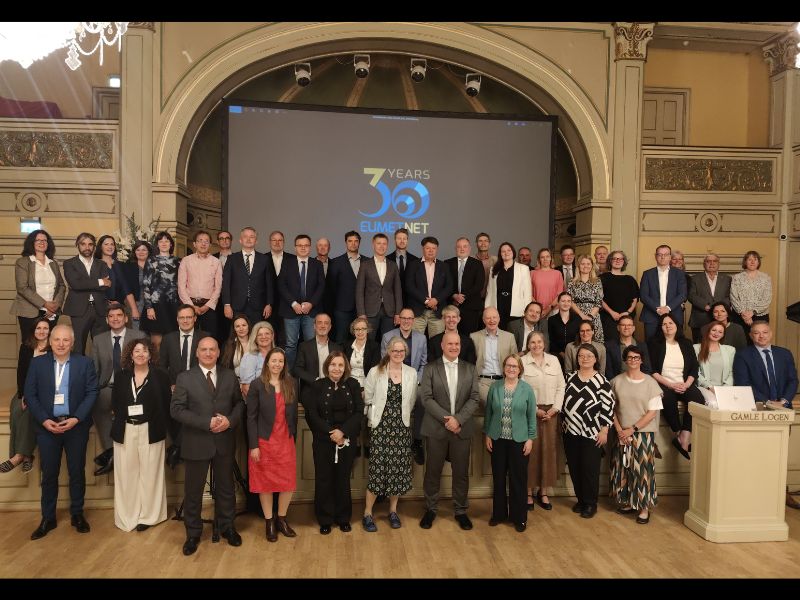
In 2026, EUMETNET marks 30 years of cooperation between European National Meteorological Services. Since 1996, EUMETNET has enabled its members to work together on shared priorities, from strengthening observation networks and improving the quality and accessibility of data, to delivering high-quality weather and climate services and accelerating innovation. This anniversary demonstrates the enduring value of European cooperation by strengthening national capabilities and delivering tangible collective benefits for members and for society.
Originally created to strengthen cooperation and represent the collective interests of European National Meteorological Services, EUMETNET has evolved in step with changing scientific, operational, and policy demands. What began as a voluntary network has grown into a mature and trusted partnership, built on long term commitment, shared objectives, and mutual confidence.
Supporting Members through shared activities
Over the past three decades, EUMETNET has enabled its members to collaborate across a wide range of domains, improving efficiency, consistency, and innovation in meteorology across Europe. Through joint activities, members are able to pool expertise, reduce unnecessary duplication, and benefit from solutions developed collectively.
This cooperative model supports National Meteorological Services in fulfilling their public service missions, whilst also strengthening Europe’s collective capacity to respond to evolving user needs, technological developments, and environmental challenges.
Value beyond borders
Since its launch, EUMETNET has steadily expanded from an initial focus on coordination into a comprehensive framework supporting a broad range of joint activities across European meteorology.
Early collaboration focused on reducing observation gaps in data‑sparse and remote areas, such as the North Atlantic and the Arctic, through ship‑based radiosonde launches and aircraft‑based observations. In parallel, surface station and radar data began to be exchanged to enhance data quality and availability. This initial work led to the establishment of the EUMETNET Composite Observing System, a major milestone in European meteorological cooperation. It demonstrated that working together at the European level could deliver improved observation coverage, higher‑quality data, pan‑European products based on national data, and ultimately more accurate weather forecasts at lower cost.
Building on this success, additional observing capabilities were progressively added, including surface marine observations, measurements of atmospheric conditions at different heights - such as wind, temperature, humidity, and airborne particles - and, more recently, pollen monitoring. At the same time, cooperation expanded beyond observation into weather forecasting, climate services, aviation meteorology, education and training, data policy and availability, and the collective representation of shared interests towards key European and global organisations.
In the forecasting domain, one of EUMETNET’s most visible achievements is MeteoAlarm, a publicly recognisable multi‑hazard early warning dissemination system. It aggregates, harmonises across borders, visualises and disseminates weather warnings issued by National Meteorological Services across Europe.
Responding to growing data demands and rapid technological change, EUMETNET has developed MeteoGate as a federated European data‑sharing infrastructure, making it easier for members and external users to discover and access meteorological data. In parallel, EUMETNET has launched a wide range of initiatives to harness artificial intelligence and machine learning for weather, climate and environmental applications.
Together, these developments illustrate how EUMETNET has evolved over three decades into a member‑driven organisation delivering integrated European capabilities across observations, forecasting, climate services, aviation, data sharing and innovation.
Member perspectives
EUMETNET’s shared achievements are made possible by the dedication and diverse contributions of its members, who engage with the organisation in different yet equally valuable ways. Some take responsibility for delivering joint programmes on behalf of all members, while others contribute their data, knowledge, and expertise for the benefit of the wider community.
As one of the 13 founding members, Portugal participates in EUMETNET through its national meteorological service, IPMA. The institute shares meteorological and climatological data collected across the national territory (at sea and in the atmosphere), benefits from access to data from other national meteorological services, contributes to joint technical programmes, and conducts its activities in accordance with European standards, ensuring the quality and interoperability of information.
IPMA participates in 34 EUMETNET programmes, including 11 mandatory and 23 optional programmes. These include OPERA (weather radars), E-SURFMAR (observations from ships), AMDAR (aircraft-based observations), E-SOH (surface observations), E-ABO (upper-air observations), E-WFC (numerical weather prediction), E-nowcasting (short-term monitoring and forecasting), EMMA (weather warnings), Climate (climate-related activities), CBCF (convective processes and support for air navigation), EUMETCAL (training and capacity building), E-IoT (Internet of Things), and AI (artificial intelligence).
On this special occasion, marking three decades of collaborative networking, IPMA congratulates EUMETNET and reiterates its commitment to actively contributing to the strengthening of relations among the European National Meteorological Services.
Looking to the future
As EUMETNET marks its 30th anniversary, the focus is not only on past achievements but also on the challenges ahead. The demands placed on National Meteorological Services continue to evolve, and sustained cooperation remains essential to addressing them effectively.
Building on three decades of shared experience, EUMETNET will continue to support its members by fostering collaboration, encouraging innovation and strengthening the European meteorological community—helping National Meteorological Services remain well equipped to deliver high quality, authoritative information for the benefit of society in the years to come.
Imagens associadas


-
Lisboa:
UTC:
Copyright © Portuguese Institute for Sea and Atmosphere 2026
-