5th Meeting of the project AQUAFISH0.0
 2025-12-10 (IPMA)
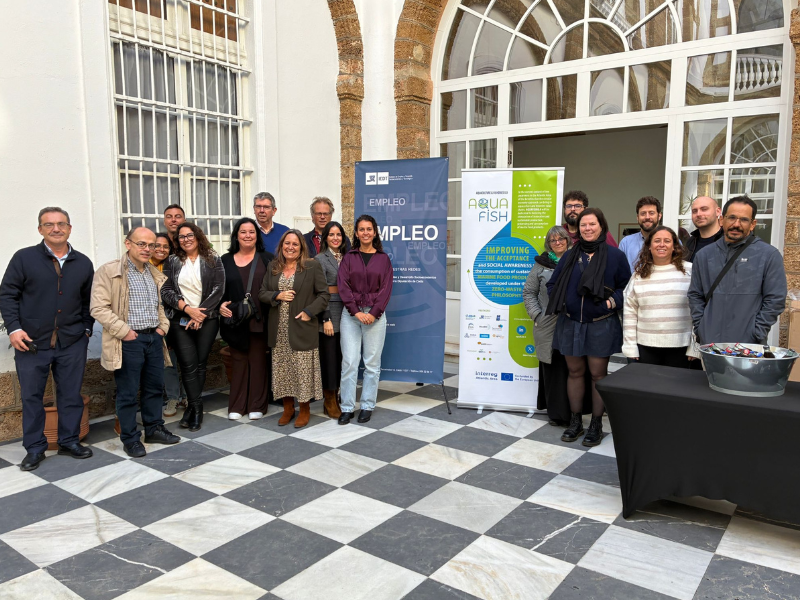
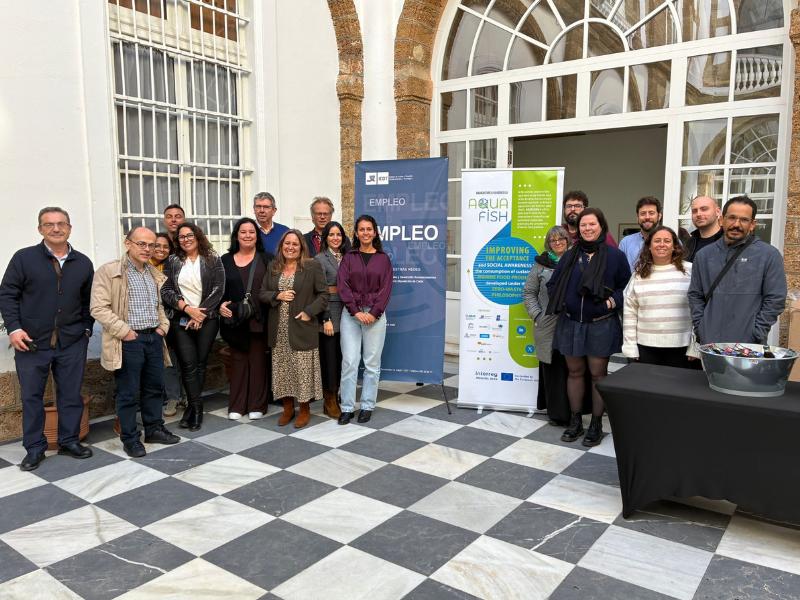
On November 25th – 26th in Cádiz (Spain), IPMA, IP, participated the 5th in-person meeting of the project steering committee to assess the progress of the AQUAFISH0.0 project. Cláudia Afonso and Carlos Cardoso, belonging to the Division of Aquaculture, Upgrading, and Bioprospection (DivAV), and João Araújo, belonging to the Estação Piloto de Piscicultura de Olhão (EPPO), participated in a progress review meeting for the international project AQUAFISH0.0 (2021-2027 Interreg Atlantic Area, ref. EAPA_0062/2022). This is a pioneering and highly innovative project aimed at developing solutions and strategies that increase consumer acceptance, appreciation, and awareness of effectively sustainable seafood.
It is worth highlighting different activities of this project in which the IPMA, IP team is particularly involved, having actively collaborated and contributed decisively to new solutions and approaches.
There is a first line of action in which IPMA, IP, conceived, formulated, prepared, and optimized functional seafood products: sea nachos with the incorporation of seaweed (Gracilaria gracilis) and fish-enriched sauce (mackerel, Scomber colias). These products seek to address the need to use and valorise fisheries, aquaculture, and industrial processing resources that are currently underexploited and undervalued, combining sensory quality with commercial competitiveness, technological viability, and environmental sustainability.
In a second line of action, IPMA, IP, is modelling the risks and benefits associated with the consumption of seafood, with an emphasis on underexplored fish and seaweed species and on new functional products by using advanced mathematical tools. The aim is to generate accurate and well-founded consumption recommendations in order to give consumers safety and trust.
The third work vector, is tasked with developing pilot actions focused on identifying sustainable production models for innovative food products. IPMA’s contribution within this vector centers on the development of sea urchin production systems — a low-trophic level organism — using Recirculating Aquaculture System (RAS) technology. Additionally, this vector includes the co-production, valorisation, and utilization of marine macroalgae produced within the RAS, as well as in Integrated Multi-Trophic Aquaculture (IMTA) systems.
A fourth dimension of IPMA, IP's involvement in the AQUAFISH0.0 project aims to share knowledge with the various stakeholders in the sector and, in particular, with consumers, seeking to raise their awareness of the importance of responsible consumption of sustainable seafood. In this context, there is a collaboration with the IPMA Schools program, encompassing visits by elementary school pupils to IPMA in Algés and the participation of these children in practical didactic activities aimed precisely at their education and awareness of the sea, its treasure trove, and the preservation of its resources in a philosophy of sustainability.
As part of this project meeting, a knowledge dissemination video aimed at the general public was presented, with a tutorial character and dedicated to the preparation of sea nachos. You can view the recipe for nachos with seaweed and learn how to prepare this innovative functional food.
Imagens associadas


-
Lisboa:
UTC:
Copyright © Portuguese Institute for Sea and Atmosphere 2026
-